
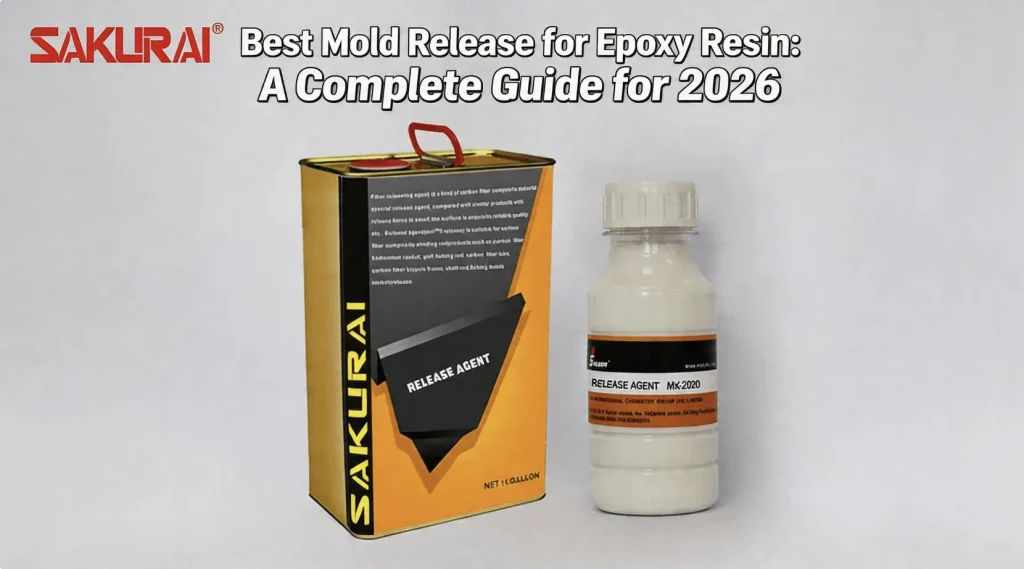
Choosing the right mold release agent for epoxy resin can make or break your project. Whether you are casting decorative pieces, manufacturing composite parts, or building industrial molds, the release agent you select directly impacts surface finish, mold longevity, and production efficiency.
In this guide, we break down the top mold release options for epoxy resin, explain how each type works, and help you choose the best solution for your specific application.
Why Mold Release Matters for Epoxy Resin
Epoxy resin is known for its strong adhesive properties — which is exactly why it bonds so aggressively to mold surfaces. Without a proper release agent, you risk:
- Permanent bonding between the cured resin and the mold
- Surface defects such as pitting, tearing, or rough textures
- Mold damage that shortens tool life and increases costs
- Difficult demolding that slows production cycles
A quality mold release creates a thin barrier film between the epoxy and the mold surface, ensuring clean separation every time.
Types of Mold Release Agents for Epoxy Resin
1. Silicone-Based Release Agents
Silicone sprays and liquids are among the most popular choices for epoxy resin work. They form a slick, non-reactive film that prevents adhesion effectively.
Pros: Easy application, excellent release properties, widely available
Cons: May cause fish-eye defects in subsequent coatings, can transfer to part surface
Best for: General casting, hobby projects, non-painted parts
2. PVA (Polyvinyl Alcohol) Release Films
PVA is a water-soluble release agent that forms a thin, transparent film on the mold surface. It is particularly popular in composite manufacturing.
Pros: Water-soluble (easy cleanup), no silicone contamination, paintable parts
Cons: Single-use per application, can leave slight texture
Best for: Composite layups, fiberglass work, parts that need painting
3. Wax-Based Release Agents
Paste wax and liquid wax releases have been used in mold making for decades. They provide a reliable barrier when properly applied and buffed.
Pros: Inexpensive, proven track record, good for porous molds
Cons: Requires multiple coats and buffing, buildup over time
Best for: New molds (sealing), wood molds, budget-conscious projects
4. Semi-Permanent Release Systems
Semi-permanent releases chemically bond to the mold surface and provide multiple releases from a single application — often 10 to 50+ cycles.
Pros: Multiple releases per application, consistent surface finish, no buildup
Cons: Higher initial cost, requires proper curing time
Best for: High-volume production, precision parts, industrial manufacturing
How to Choose the Right Mold Release
Consider these factors when selecting a mold release for your epoxy resin project:
- Production volume: High-volume runs benefit from semi-permanent systems; low-volume or one-off projects can use wax or silicone
- Surface finish requirements: Semi-permanent releases deliver the most consistent, high-gloss finishes
- Post-processing needs: If parts need painting or bonding, avoid silicone-based releases
- Mold material: Metal molds work well with semi-permanent systems; porous molds (wood, plaster) may need wax sealing first
- Cost per release: While semi-permanent agents cost more upfront, the cost per release cycle is often lower
Application Tips for Best Results
- Always clean the mold thoroughly before applying release agent
- Apply thin, even coats — more is not better
- Allow proper cure time between coats (especially for semi-permanent systems)
- For new molds, apply extra coats for the first few cycles to build up the release film
- Store release agents according to manufacturer specifications
Frequently Asked Questions
Can I use cooking spray as a mold release for epoxy?
While cooking spray can work in a pinch for small hobby projects, it is not recommended for quality work. It can leave residue, affect surface finish, and is inconsistent compared to purpose-made release agents.
How many coats of mold release do I need?
For wax-based releases, apply 3-5 coats on new molds, buffing between each coat. Semi-permanent systems typically require 2-4 initial coats with proper cure time. After the mold is seasoned, fewer coats are needed.
What is the best mold release for silicone molds with epoxy?
Silicone molds naturally release epoxy well, but a light application of mold release wax or a dedicated silicone mold release spray can extend mold life and improve surface finish.
How do I remove mold release residue from cured epoxy parts?
For silicone-based residue, use isopropyl alcohol or acetone. PVA films dissolve in warm water. Wax residue can be removed with mineral spirits or a dedicated wax remover.