

Getting the release agent wrong costs more than most manufacturers want to admit. A wind blade producer in Denmark once traced $180,000 in annual scrap back to a single compatibility issue between their epoxy system and a silicone-containing release agent. The parts looked fine coming off the mold — the problem only showed up at the bonding stage, three operations later. By then, the damage was done.
This guide is written for buyers who are either sourcing a resin release agent for the first time or re-evaluating their current supplier after a quality or cost problem. It covers the chemistry you need to understand, the product categories available, and how to evaluate suppliers. — not just what it says on the invoice.
What Is a Resin Release Agent and Why It Matters in Manufacturing
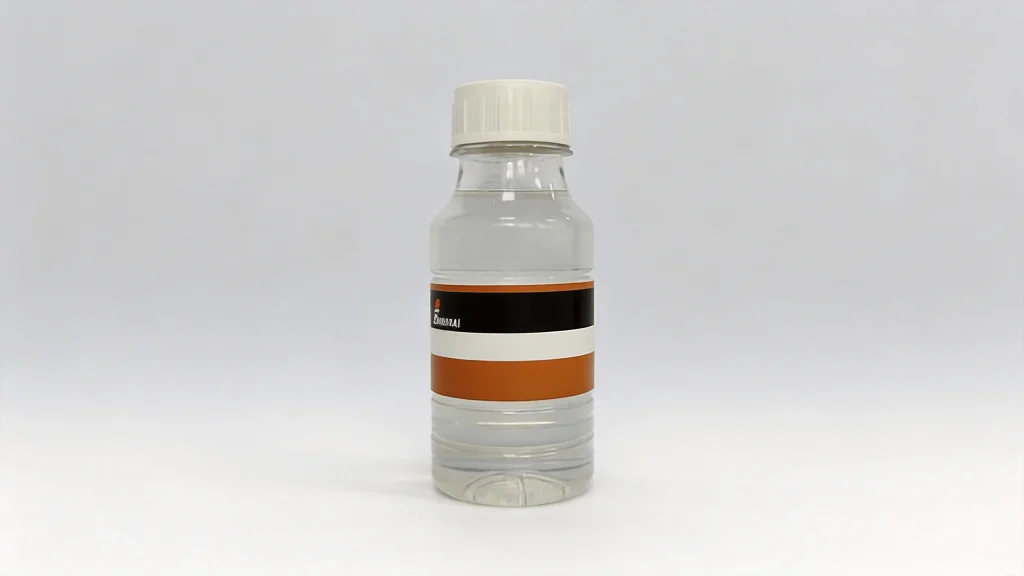
A resin release agent is a chemical barrier applied to a mold surface — or incorporated directly into a resin formulation — to prevent the cured part from bonding to the tool. Without it, the adhesion forces between a cured polymer and a metal or composite mold surface can exceed the structural strength of the part itself. The result is either a destroyed part, a damaged mold, or both.
How Resin Release Agents Work at the Mold Surface
The mechanism depends on the product chemistry, but most external release agents work through one or more of three principles: barrier film formation, surface energy reduction, and chemical non-reactivity with the resin system.
- Barrier film agents — including waxes and PVA (polyvinyl alcohol) films — deposit a physical layer between the mold and the resin. The resin cures against the film rather than the mold surface. When the part is demolded, the film either stays on the part (and is washed off) or stays on the mold (and is reapplied next cycle).
- Semi-permanent systems work differently. They bond covalently or through strong adsorption to the mold surface, forming a thin, durable polymer layer — typically 50–200 nanometers thick — that has very low surface energy. Resin systems cannot wet this surface effectively, so adhesion is minimal. Because the layer is chemically bonded to the mold rather than consumed by each release, it survives multiple demolding cycles before reapplication is needed.
- Surface tension reduction is the underlying physics in both cases. A clean steel mold surface has a surface energy of roughly 40–70 mN/m. Most cured epoxy systems have surface energies in the 40–50 mN/m range — close enough to the mold that strong adhesion develops. A well-applied semi-permanent release agent drops the mold surface energy to 18–24 mN/m, well below the critical wetting threshold for most resin systems.
Industries That Rely on Resin Mold Release Agents
The applications span a wide range of manufacturing sectors, each with distinct requirements:
- Wind energy— large epoxy and vinyl ester blade shells, spar caps, and root sections; semi-permanent systems dominate due to mold size and cycle economics
- Marine composites— polyester and vinyl ester hulls, decks, and structural components; often open-mold hand layup or spray-up
- Automotive composites— SMC, RTM, and wet compression molding for structural and Class A body panels; tight surface finish specs
- Aerospace— prepreg epoxy tooling and structural parts; autoclave-compatible release agents, often silicone-free
- Polyurethane casting— foam, elastomer, and RIM parts; high reactivity of PU systems creates specific compatibility demands
- Epoxy tooling and patterns — master molds and production tools; release agent must not interfere with dimensional accuracy
- FRP pipe and tank fabrication — filament winding and hand layup; mandrel release is a specialized sub-category
- RTM and vacuum infusion— closed-mold processes where release agent selection directly affects resin flow and part quality
- Electrical encapsulation — epoxy potting and casting; release agents must be compatible with electrical insulation requirements
The Cost of Using the Wrong Release Agent
The direct costs are visible: scrapped parts, mold repair, rework labor. The indirect costs are harder to quantify but often larger.
A typical release failure in a composite manufacturing environment triggers a cascade. The part sticks. The operator applies force — wedges, pry bars, compressed air. The mold surface gets scratched or gouged. Now the mold needs repair before the next cycle. Repair time for a large wind blade mold can run 4–8 hours. At a loaded labor rate of $75–120/hour and a mold that should be cycling every 12–24 hours, that’s a significant production loss per incident.
Surface contamination from incompatible release agents — particularly silicone transfer — creates downstream failures that are even more expensive because they’re discovered late. A painted automotive panel that fish-eyes in the paint booth, or a bonded structural joint that fails adhesion testing, may have been contaminated at the molding stage. Tracing the root cause takes time, and the rework cost multiplies with each downstream operation already completed.
Industry data from composite manufacturing surveys consistently shows that release-related defects account for 15–30% of total scrap in open-mold FRP production. Getting the release agent right is not a minor procurement decision.
Types of Resin Release Agents: Which Category Fits Your Application
The market offers five distinct categories of resin release agents, and the right choice depends on your resin system, mold material, production volume, and surface finish requirements. Buying the wrong category — even a high-quality product in the wrong category — will underperform.
Solvent-Based vs. Water-Based Resin Release Agents
This is often the first decision point, and it’s increasingly driven by regulatory requirements as much as performance.
|
Criterion
|
Solvent-Based
|
Water-Based
|
|---|---|---|
|
VOC Content
|
High 200–700 g/L typical
|
Low 0–50 g/L
|
|
Flash-Off Time
|
Fast 2–5 min at 20°C
|
Slower 5–15 min (humidity-dependent)
|
|
Releases per Application
|
3–8 (sacrificial types)
|
3–8 (sacrificial types)
|
|
Low-Temperature Performance
|
Good (solvent aids wetting)
|
Can be problematic below 10°C
|
|
Surface Finish Quality
|
Excellent gloss potential
|
Good some match solvent
|
|
Post-Release Bonding/Painting
|
Depends on chemistry
|
Generally better compatibility
|
|
Regulatory Compliance (EU/US)
|
Increasingly restricted
|
Preferred REACH & EPA
|
|
Shelf Life
|
2–3 years typical
|
1–2 years (freeze-thaw sensitivity)
|
Solvent-based products still dominate in applications where fast flash-off is critical — high-humidity environments, cold shops, or processes where cycle time is tight. Water-based formulations have improved significantly over the past decade and now match solvent-based performance in most open-mold applications. For any facility operating under EU REACH restrictions or US EPA air quality regulations, water-based systems are the practical path forward.
Semi-Permanent Release Agents for High-Volume Production
Semi-permanent release agents (SPRAs) are the workhorses of high-volume composite manufacturing. They’re more expensive per liter than wax-based products, but the economics flip quickly when you account for release count and labor.
A properly applied SPRA system typically delivers 10–50 releases per application, depending on the product, the resin system, and the mold surface condition. Some advanced fluoropolymer-based systems claim 80–100+ releases on well-maintained metal tooling. The application protocol matters enormously:
1. Initial mold sealing: 3–5 coats applied to a clean, prepared mold surface, with full flash-off between each coat (typically 10–15 minutes at 20°C). This builds the base polymer layer.
2. First production run: 1–2 additional coats after sealing, before the first part.
3. Ongoing production: Topup coats applied every 10–20 releases, or when release force begins to increase noticeably.
The chemistry varies by manufacturer, but most SPRAs are based on one of three polymer systems: fluoropolymers (PTFE-related chemistries), silicone polymers, or proprietary carnauba/polymer hybrids. Fluoropolymer systems offer the lowest surface energy and best chemical resistance. Silicone-based SPRAs perform well but are incompatible with any downstream painting or bonding operation — a critical limitation.
Sacrificial (Single-Use) Release Agents: Wax and Film Types
Sacrificial release agents are consumed with each demolding cycle. They’re the right choice for prototype work, low-volume production, or applications where the mold geometry changes frequently.
- Paste and liquid waxes— typically carnauba-based — are the most familiar type. They’re applied by hand, buffed to a thin film, and provide 1–3 releases per application. They’re inexpensive, widely available, and easy to apply without specialized equipment. The limitation is labor: in a production environment running 20 parts per day, the time spent waxing adds up fast.
- PVA (polyvinyl alcohol) film is a water-soluble release agent applied by spray or brush. It forms a visible green or amber film on the mold surface. PVA is particularly useful for polyester and vinyl ester systems where wax alone may not provide sufficient release. The film transfers to the part surface and is washed off with water. It leaves a slightly textured surface finish — not suitable for Class A applications, but acceptable for structural parts.
- Release films (PTFE, FEP, nylon peel ply) are physical film inserts used in prepreg and infusion processes. They’re a separate category from chemical release agents but serve the same function in certain process configurations.
Internal Release Agents Added Directly to Resin Systems
Internal release agents (IRAs) are additives blended into the resin formulation before processing. They migrate to the resin-mold interface during cure, forming a release layer from the inside out. This approach is standard in closed-mold processes — RTM, SRIM, RIM — where applying an external release agent to the mold surface before each cycle is impractical.
Common IRA chemistries include zinc stearate, calcium stearate, and proprietary fatty acid derivatives. Dosage levels are typically 0.5–2.0% by weight of the resin system. Too little and release is inadequate; too much and the IRA can migrate to the part surface, causing adhesion problems in downstream operations.
IRAs are also used in combination with external release agents in some high-volume polyurethane foam applications, where the combination of internal and external release provides more consistent demolding across a long production run.
Release Agents for Specific Resins: Epoxy, Polyester, Polyurethane, Vinyl Ester
Resin chemistry matters. A release agent that works perfectly on polyester may fail on epoxy, and vice versa.
Epoxy systems are the most demanding. Epoxy resins are highly reactive and form strong covalent bonds with many surfaces. They require release agents with very low surface energy and high chemical resistance. Critically, any epoxy part destined for painting, coating, or structural bonding must be processed with a silicone-free release agent. Even trace silicone contamination — below the detection threshold of visual inspection — causes adhesion failure.
Polyester and vinyl ester systems are somewhat more forgiving. Styrene in the resin acts as a mild solvent that can partially dissolve wax-based release agents, so wax selection matters. High-styrene systems (above 35% styrene content) can degrade wax films faster than expected, reducing release count. Vinyl ester systems are more aggressive than standard orthophthalic polyester and may require a more chemically resistant SPRA.
Polyurethane systems present a unique challenge: the isocyanate component reacts aggressively with moisture and many organic surfaces. Release agents for PU must be chemically inert to isocyanates and must not introduce moisture to the mold surface. Many PU processors use specialized wax-based or fluoropolymer release agents specifically formulated for isocyanate compatibility.
A common pitfall: buyers assume that a release agent listed as “suitable for composites” covers all resin types. It doesn’t. Always verify compatibility with your specific resin system — not just the resin family.
—
Key Performance Criteria: What to Evaluate Before You Buy
A product data sheet (TDS) for a release agent can run 2–4 pages and contain a lot of numbers. Knowing which numbers actually matter for your process separates informed buyers from those who end up running expensive compatibility trials after the fact.
Release Efficiency and Number of Releases Per Application
This is the single most important performance metric for production economics. Ask every supplier for this number — and ask how it was measured. “Releases per application” should be stated for a specific resin system, mold material, and application protocol. A claim of “50 releases” measured on polished steel with a slow-cure epoxy may translate to 15 releases on your glass-filled polyester with a textured aluminum tool.
Release force values — measured in N/cm² or psi — give you a more objective comparison point. ASTM D4169 and ISO 8510 provide standardized peel and pull-off test methods that some suppliers use for TDS data. If a supplier can provide release force data from standardized testing, that’s a meaningful quality indicator.
Surface Finish Quality: Gloss, Texture, and Contamination Risk
Surface finish requirements vary enormously by application. A structural wind blade spar cap has no cosmetic requirements. A Class A automotive body panel has a surface roughness specification measured in Ra values (typically Ra < 0.8 µm for Class A). A marine hull needs a smooth, glossy finish for hydrodynamic performance and aesthetics. The release agent affects surface finish in two ways: directly, through the texture of the release film itself, and indirectly, through contamination transfer to the part surface. Wax-based agents can leave a slight haze or micro-texture. PVA film leaves a visible texture. High-quality SPRAs, properly applied, are essentially invisible — the part surface replicates the mold surface with no release agent artifact. Contamination risk is the more serious concern. Silicone transfer, wax residue, and fluoropolymer migration can all affect downstream operations. Request contamination transfer data from your supplier — specifically, surface energy measurements on parts released from treated molds (Dyne test values, contact angle data).
Mold Compatibility: Metal, Composite, and Silicone Tooling
Not all release agents work on all mold materials. The key variables are surface porosity, surface energy, and chemical reactivity.
**Steel and aluminum tooling** — the most common mold materials — are compatible with most release agent chemistries. The main concern is corrosion inhibition: some water-based release agents can promote flash rust on steel molds if the formulation doesn’t include adequate corrosion inhibitors.
**Composite tooling** (carbon fiber or glass fiber epoxy molds) is porous at the micro level, especially when new. New composite molds require more aggressive initial sealing — typically 5–7 coats of SPRA — before production begins. Using an insufficient sealing protocol on a new composite mold is one of the most common causes of first-part sticking.
**Silicone rubber tooling** is a special case. Most release agents don’t adhere well to silicone surfaces because silicone already has very low surface energy. For silicone molds, specialized release agents — often water-based with specific surfactant packages — are required. Standard SPRAs designed for metal or composite tooling will not build up properly on silicone.
Temperature and Cure Cycle Resistance
Match the release agent’s operating temperature range to your cure cycle. This is non-negotiable. Most standard release agents are rated for ambient cure to 80°C. Elevated-temperature cure processes — post-cure ovens at 120–150°C, autoclave processing at 180–200°C — require release agents specifically formulated for high-temperature stability. A release agent that degrades at cure temperature will either transfer contamination to the part or lose its release properties mid-cycle, causing the part to stick. For autoclave processing, the release agent must also withstand the pressure cycle (typically 3–7 bar) without being displaced or redistributed. Fluoropolymer-based SPRAs generally perform best in autoclave applications. Check the TDS for: maximum continuous service temperature, maximum short-term peak temperature, and whether the rating applies to the cured release film or the wet product.
VOC Content and Environmental
Compliance Requirements VOC regulations vary significantly by region and are tightening globally. Buyers sourcing for facilities in multiple countries need to verify compliance in each jurisdiction.
– **EU**: REACH regulation controls substance registration and restriction. The Industrial Emissions Directive (IED) sets VOC emission limits for surface treatment operations. Many solvent-based release agents contain substances on the SVHC (Substances of Very High Concern) candidate list.
– **United States**: EPA National Emission Standards for Hazardous Air Pollutants (NESHAP) for reinforced plastic composites (40 CFR Part 63, Subpart WWWW) sets styrene and HAP emission limits. California’s SCAQMD Rule 1162 imposes stricter VOC limits for polyester resin operations.
– **China**: GB 30981-2020 sets VOC content limits for industrial coatings and related products, including mold release agents used in manufacturing. Request the SDS (Safety Data Sheet) in the language of your destination country — this is a legal requirement in most jurisdictions, not just a courtesy. A supplier who can’t provide a compliant SDS for your market is a compliance risk.
Questions to Ask Your Supplier Before Ordering
1. What resin systems and mold materials has this product been tested with?
2. What is the documented release count per application, and under what test conditions?
3. Is this product silicone-free? Can you certify that on the TDS?
4. What is the maximum cure temperature this product can withstand?
5. Can you provide a COA (Certificate of Analysis) for the specific batch being shipped?
6. Is the SDS available in my country’s required language and format?
7. What is your technical support process if I experience release failures?
8. Do you offer samples for process validation before a full order?
—
Not sure which type fits your process? Send us your resin system and mold material details — our technical team will recommend the right product. Request a Free Technical Consultation
—
Resin Release Agent Application Methods and Best Practices
Even the best release agent will fail if it’s applied incorrectly. Application technique accounts for a surprising proportion of release failures in production environments — in our experience, roughly 40% of release problems reported by new customers turn out to be application issues rather than product issues.
Spray Application: Equipment Settings and Coverage Rates
Spray application is the standard method for production environments. It delivers consistent film thickness across large mold surfaces faster than any manual method.
For most liquid release agents, use an HVLP (High Volume Low Pressure) spray gun with a 1.0–1.4 mm fluid tip. Spray pressure at the gun: 0.5–1.5 bar (7–22 psi). Distance from mold surface: 20–30 cm. Overlap each pass by 50% to avoid thin spots at pass edges.
Coverage rate for a ready-to-use SPRA is typically 8–15 m² per liter for production coats, and 5–10 m² per liter for initial sealing coats (where you’re building up the base layer on a porous surface). Concentrate products require dilution — follow the supplier’s ratio exactly. A 1:4 concentrate diluted to 1:6 to save product will underperform.
Flash-off time between coats is critical. Most SPRAs require 10–15 minutes at 20°C and 50% relative humidity between coats. In cold or humid conditions, extend flash-off time. Applying the next coat before the previous one has fully dried traps solvent or water in the film, creating a weak, non-uniform layer that will fail early.
Wipe-On Application for Complex Geometries and Small Molds
For molds with deep undercuts, tight radii, or complex internal geometries, spray application can leave uneven coverage — more product in recesses, less on raised features. Wipe-on application with a lint-free cloth or foam applicator gives better control in these situations.
Apply a small amount of product to the applicator — not the mold — and work it into the surface in overlapping circular motions. The goal is a thin, uniform film, not a visible wet coat. Buff lightly with a clean cloth after application to remove any excess. Excess product is one of the most common application mistakes (covered below).
For paste waxes, the technique is the same: apply thin, allow to haze (5–10 minutes), buff off. Multiple thin coats outperform a single heavy coat every time.
Automated Dispensing Systems for High-Volume Lines
High-volume production lines — automotive SMC presses, polyurethane foam lines, large-format RTM — often use automated release agent dispensing systems. These range from simple spray bars triggered by the press cycle to fully programmable robotic spray systems with flow meters and coverage verification.
Automated systems deliver consistency that manual application can’t match, and they reduce labor cost significantly. The key parameters to control: flow rate (mL/s), atomization pressure, spray pattern width, and traverse speed. Work with your release agent supplier to validate these parameters — the optimal settings for automated application often differ from manual spray recommendations.
For PU foam applications, heated spray systems (product temperature 40–60°C) improve atomization and film formation, particularly with wax-based release agents that have higher viscosity at ambient temperature.
Surface Preparation Before Applying Release Agent
This step gets skipped more often than it should, and it’s the root cause of a disproportionate number of release failures.
New molds require thorough cleaning to remove machining oils, mold release residue from the pattern, and any surface contamination from handling. Use a dedicated mold cleaner — not a general-purpose solvent — and wipe in one direction to avoid redistributing contamination. Allow the mold to dry completely before applying release agent.
Molds returning from repair need the same treatment, plus attention to the repaired area. Gel coat repairs, surface fillers, and welded areas may have different surface energy than the surrounding mold surface and may require additional sealing coats.
Contaminated molds — those that have had a release failure, or that show signs of resin buildup — must be stripped back to bare mold surface before reapplying release agent. Applying fresh release agent over contaminated or degraded release agent is a common shortcut that compounds the problem.
A step-by-step protocol for first-time mold preparation:
1. Clean mold surface with dedicated mold cleaner; wipe dry with lint-free cloth
2. Inspect surface for scratches, porosity, or contamination; address any defects
3. Apply first sealing coat of SPRA; allow full flash-off (15 min at 20°C)
4. Apply second sealing coat; allow full flash-off
5. Apply third sealing coat; allow full flash-off
6. For composite molds or porous surfaces: apply 4th and 5th sealing coats
7. Apply one production coat; allow full flash-off
8. Run first part — expect slightly higher release force than steady-state production
9. After first release, inspect mold surface; apply one topup coat if needed
10. Begin normal production cycle
Common Application Mistakes That Cause Release Failures
These are the patterns we see repeatedly when customers contact us after a release failure:
- Over-application— applying too much product in a single coat. Thick films don’t cure uniformly, trap solvents, and can actually reduce release performance by creating a soft, tacky surface layer. Thin and even is always the goal.
- Insufficient flash-off time — closing the mold or applying the next coat before the release agent has fully dried. This is especially common in production environments under time pressure. The result is a weak, layered film that fails after a few releases.
- Applying to a warm mold— mold surface temperature above 40°C accelerates solvent evaporation and can cause the release agent to dry before it has properly wetted the surface. Allow the mold to cool to below 35°C before applying.
- Skipping the sealing protocol on new molds — applying one or two coats and going straight to production. New molds, especially composite tools, are porous and will absorb the first several coats. Skipping the full sealing protocol means the first few parts will stick or release with difficulty.
- Using the wrong dilution ratio— particularly with concentrate products. Diluting too aggressively reduces film build per coat and requires more coats to achieve the same protection. Diluting too little wastes product and can leave a heavy film that affects surface finish.
- Contaminating the release agent container— dipping a used applicator back into the product container introduces resin residue, dust, and moisture. Always pour product into a separate application container.
How to Evaluate and Select a Resin Release Agent Supplier
Product performance is only part of the equation. In international B2B procurement, supplier reliability, documentation quality, and technical support capability often matter as much as the chemistry itself. A great product from an unreliable supplier creates operational risk.
Certifications and Quality Standards to Look For (ISO, REACH, RoHS)
- ISO 9001:2015 certification is the baseline quality management standard. It doesn’t guarantee product performance, but it does mean the supplier has documented processes for production, quality control, and corrective action. Ask for the certificate and verify it’s current — certificates expire and must be renewed.
- REACH compliance is mandatory for chemical products sold into the EU market. The supplier should be able to provide a REACH compliance statement for each product, confirming that all substances are registered and that no SVHC substances are present above 0.1% w/w (or that required notifications have been made).
- RoHS compliance is relevant if your parts are used in electrical or electronic equipment. Not all release agent applications require RoHS compliance, but if yours does, verify it explicitly.
- SDS (Safety Data Sheet) availability in the required language and format for your country is a legal requirement, not optional. EU format (16-section, per Regulation EC 1907/2006), US format (OSHA HazCom 2012, GHS-aligned), and Chinese format (GB/T 16483) each have specific requirements. A supplier who provides only an English SDS for all markets is cutting corners on compliance.
Minimum Order Quantities, Packaging Options, and Lead Times
For international buyers, packaging and logistics details are practical procurement concerns that affect total landed cost.
Standard packaging options for liquid release agents:
- 1L, 5L, 20L cans/pails — for sampling, trials, and small-volume production
- 200L drums — standard production volume; UN-rated for hazardous goods shipping
- 1000L IBC totes — for high-volume users; significant per-liter cost reduction
Minimum order quantities (MOQs) vary widely. Specialty or custom-formulated products may have MOQs of 200–500L. Standard catalog products from established manufacturers may have no MOQ for stocked items.
Lead times for export orders typically run 2–4 weeks for standard products, 4–8 weeks for custom formulations. Confirm whether the supplier holds finished goods inventory or manufactures to order — this affects your ability to respond to demand spikes.
Technical Support and Application Engineering Capabilities
This is a differentiator that procurement managers often underweight until they have a production problem at 2 AM.
A capable supplier should offer:
- Pre-sale technical consultation to match product to process
- Application protocol documentation specific to your resin system and mold material
- Troubleshooting support for release failures — by phone, email, or on-site visit
- Trial support for new product qualification — not just sending samples, but helping you interpret results
Ask specifically: “If we have a release failure during production, what is your response process and typical response time?” The answer tells you a lot about the supplier’s operational maturity.
Consistency Between Batches: Why QC Documentation Matters
Batch-to-batch consistency is the quality issue that causes the most operational pain in high-volume production. A release agent that performs perfectly for six months and then suddenly causes sticking — with no change in your process — is almost always a batch consistency problem.
Key QC documents to request:
- Certificate of Analysis (COA) for each batch shipped, showing measured values for key parameters (viscosity, solids content, pH for water-based products, specific gravity)
- Specification limits— the acceptable range for each parameter, not just the nominal value
- Trend data— some suppliers can provide batch-to-batch trend charts for key parameters on request; this is a strong indicator of process control maturity
A supplier who can’t provide a COA per batch, or who provides a COA with only nominal values and no specification limits, is not operating a controlled manufacturing process.
Supplier Evaluation Checklist for Procurement Managers
Use this checklist when evaluating any new resin release agent supplier:
Quality and Compliance
- ISO 9001:2015 certificate — current and verifiable
- REACH compliance statement per product
- SDS available in required language(s) for destination country
- COA provided per batch with specification limits
- Third-party test data available (not just internal data)
- RoHS compliance documentation (if applicable)
Product and Technical
- TDS lists compatible resin systems and mold materials explicitly
- Release count per application documented with test conditions
- Operating temperature range stated for cured film
- Silicone-free certification available (if required)
- Samples available for process validation trial
Commercial and Logistics
- MOQ acceptable for your volume requirements
- Packaging options match your consumption rate and storage capacity
- UN-rated packaging for hazardous goods (if applicable)
- Export experience to your country — Incoterms flexibility (FOB, CIF, DAP)
- Lead time confirmed for standard and urgent orders
- Payment terms acceptable
Support
- Pre-sale technical consultation available
- Application protocol documentation provided
- Troubleshooting support process defined
- On-site technical support available (for large accounts)
- Reference customers in similar applications available on request